July 16, 2026
AI Decision Support for Executive Teams: 2026 Guide
Unlock faster, informed decisions with AI decision support for executive teams. Discover best practices and future insights in our 2026 guide.

AI Decision Support for Executive Teams: 2026 Guide
TL;DR:
- AI decision support helps executives make faster and better decisions by synthesizing data and modeling scenarios. Proper governance, clear roles, and phased deployment build trust and ensure accountability in AI use. Starting with high-impact use cases and strict data provenance practices maximizes ROI within 90 days.
AI decision support for executive teams is defined as the use of AI agents and analytics platforms to synthesize data, model scenarios, and prepare briefings so leaders can make faster, better-informed strategic choices. Right now, 1 in 6 CXOs actively use AI in strategic decisions, with that number projected to double within three years. That shift is not a trend. It is a structural change in how executive leadership works. The industry term for this capability is “decision intelligence,” and it sits at the intersection of data science, AI governance, and organizational design. This guide explains how to deploy it, govern it, and measure it before your next board cycle.
What are the highest-impact AI decision support use cases for executive teams?
AI decision support can cut pre-decision workloads by 50% by automating the synthesis work that currently consumes analyst hours. No other executive AI application produces comparable ROI per dollar spent. The highest-value use cases map directly to specific C-suite roles.
- COO: Synthesized operations dashboards. AI agents pull data from ERP, supply chain, and HR systems into a single anomaly-detection view. The COO sees exceptions, not raw tables, and spends meeting time on decisions rather than data cleanup.
- CFO: Scenario simulators. AI models run dozens of financial scenarios overnight, stress-testing assumptions across revenue, cost, and macro variables. The CFO arrives at the planning session with ranked options, not blank slides.
- Chief Strategy Officer: Competitive briefs. AI compresses a three-day analyst research cycle into a two-hour automated brief. The CSO gets structured intelligence on competitor moves, market signals, and regulatory shifts before the weekly strategy call.
- CEO: Board synthesis and automated reporting. AI drafts board decks from live data, flags narrative inconsistencies, and surfaces questions the board is likely to ask. The CEO reviews and attests rather than assembles.
Exec-layer AI tasks named and owned by functional leaders enhance accountability across the entire C-suite. The chief of staff runs the cadence and attestation process, while a governance partner oversees audit readiness. That division of responsibility is what separates a productive deployment from a liability.
Pro Tip: Start with the use case that has the clearest data source and the most painful manual workload. A CFO scenario simulator with clean financial data will deliver visible ROI in weeks, not quarters.

Which prerequisites and governance practices ensure safe, effective AI decision support?
The single most important governance distinction is the difference between decision support and decision delegation. Blurring decision support and delegation leads to governance failures, and human sign-off is mandatory on every AI output. AI informs. Humans decide. That line must be written into your operating charter before you deploy anything.
Getting the prerequisites right takes deliberate setup. Work through these steps before your first use case goes live:
- Audit your data sources. Map every system that feeds the AI, confirm data quality, and document provenance trails. Audit-quality AI output requires source data provenance trails integrated with AI outputs to survive board and audit committee scrutiny. If you cannot trace a number back to its source, the output is not board-ready.
- Define human-in-the-loop attestation. Assign a named executive to sign off on each AI output type. The CEO attests to board synthesis. The CFO attests to scenario outputs. No output reaches a decision meeting without a named human owner.
- Calibrate AI autonomy by decision risk. Leadership must calibrate AI autonomy based on decision risk, keeping final authority with humans to prevent governance errors. Low-risk, reversible decisions can use higher AI autonomy. High-stakes, irreversible decisions require tighter human review loops.
- Assign a governance partner. This person owns the audit trail, monitors output quality, and flags drift between AI recommendations and actual outcomes. Think of this role as your AI’s internal auditor.
- Establish an explainability standard. Every AI output must include a plain-language explanation of how it reached its conclusion. CXOs prioritize data quality, legal risk mitigation, and transparency when adopting AI. If your team cannot explain an output to a board member in two sentences, the system needs recalibration.
Pro Tip: Use an AI output confidence scoring framework to flag low-confidence outputs before they reach the executive table. This single practice prevents most trust-erosion incidents in the first 90 days.
How can executive teams successfully roll out AI decision support within 90 days?
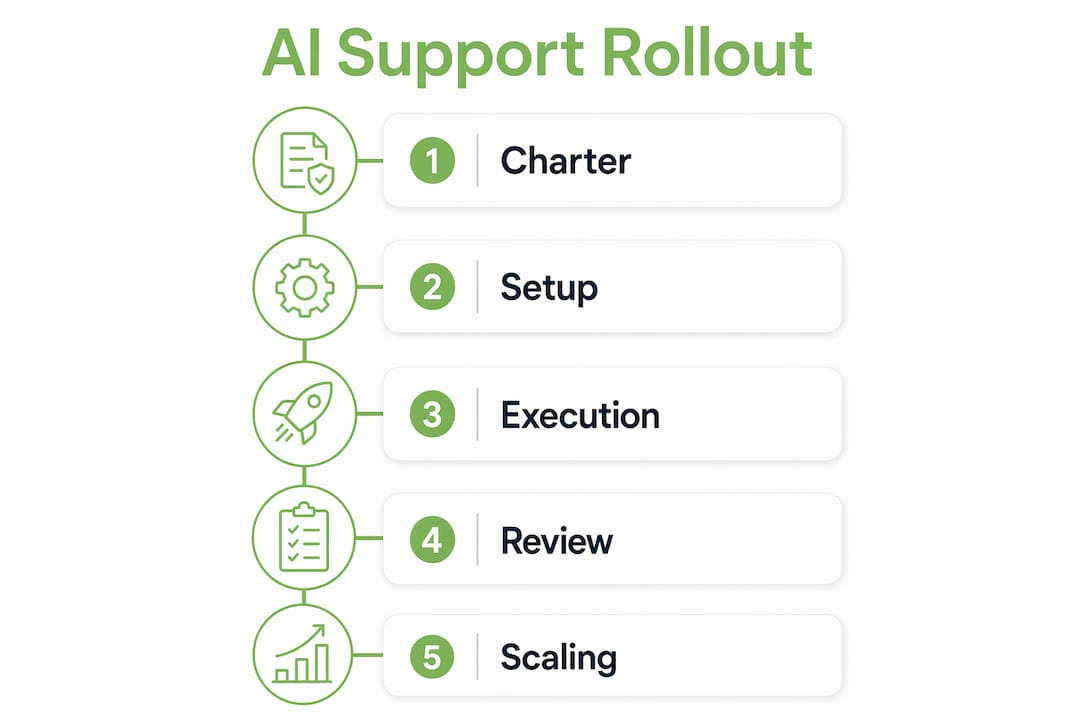
A phased 90-day rollout yields measurable lift before your next board cycle. The three phases below are designed to build confidence, not just capability.
- Days 1–30: Charter and setup. Write the program charter. Define the governance roles (chief of staff, governance partner, functional owners). Onboard your AI platform and connect it to your first data source. Run a data provenance audit. Set your attestation workflow in writing. Do not launch any live use case until governance is in place.
- Days 31–60: First use case launch. Pick one high-impact, well-scoped use case. The CFO scenario simulator or COO operations dashboard works well here because both have clear data inputs and measurable outputs. Run the first output through your full attestation workflow. Collect feedback from the functional owner. Measure time saved against the manual baseline.
- Days 61–90: Second use case and operating cadence. Add a second use case. Embed the AI review into your standing meeting cadence. Measure total pre-decision workload reduction and present findings at the next board review.
| Phase | Days | Key Deliverable | Success Metric |
|---|---|---|---|
| Charter and setup | 1–30 | Governance charter, platform onboarded | Data provenance audit complete |
| First use case | 31–60 | One live AI output in attestation workflow | Time saved vs. manual baseline |
| Second use case | 61–90 | Two use cases in cadence | Pre-decision workload reduction reported |
The most common pitfall in rapid adoption is skipping the governance charter. Teams that launch a use case before defining attestation workflows spend weeks untangling accountability after the first output error. Governance first, deployment second.
For teams earlier in their AI journey, the small business AI decision-making guide from Swipecredit covers foundational concepts that apply across organization sizes.
What common challenges arise in AI decision support adoption?
Most adoption problems trace back to three root causes: trust erosion, data quality gaps, and role confusion. Each one is fixable, but only if you name it early.
“AI decision tools create a ‘cognitive diversity engine’ by simulating a panel of advisors with competing views for better strategy. The risk is that executives treat the simulation as a verdict rather than a starting point. The tool’s job is to expand the option set, not close it.” Agentic AI Executive Team Playbook 2026
Trust erosion happens when an AI output is wrong and no one catches it before a decision meeting. The fix is a mandatory human review step before any output reaches an executive. Complex AI agents improve operational resilience through governance, observability, and policy guardrails. Observability means your team can see what the AI did, why it did it, and where it pulled its data.
Data quality gaps are the second most common failure point. AI synthesizes what it receives. If your ERP data is 60 days stale or your CRM has duplicate records, the AI output reflects those problems at scale. Run a data quality audit before each new use case, not just at initial setup.
Role confusion shows up when executives are unsure whether they are reviewing an AI recommendation or approving a final output. AI-enabled decision-making reshapes leadership roles from individual decisions to configuring hybrid human-AI processes. That shift requires explicit role definitions in your governance charter. Use an AI evaluation metrics checklist to tune AI agent independence based on decision risk. Executives who treat AI governance as a one-time setup task will face recurring role confusion. Build a quarterly review of your governance charter into the operating cadence.
Key Takeaways
AI decision support delivers the highest executive ROI when governance, attestation, and phased deployment are built in from day one, not added after the first failure.
| Point | Details |
|---|---|
| Start with governance | Write your attestation charter and assign named owners before any use case goes live. |
| Map use cases to roles | CEO, CFO, COO, and CSO each have distinct AI tasks that compress pre-decision workloads. |
| Phase your rollout | A 90-day phased plan delivers measurable lift before your next board review cycle. |
| Audit data provenance | Every AI output must trace back to its source to survive board and audit committee scrutiny. |
| Calibrate autonomy by risk | High-stakes decisions require tighter human review; low-risk decisions can use higher AI autonomy. |
What I’ve learned about executives and AI decision support
The executives who get the most out of AI decision support are not the ones who trust it most. They are the ones who question it most productively. They treat every AI output as a draft from a very fast, very well-read analyst who sometimes hallucinates. That mindset keeps them sharp.
What I have seen in client engagements is that the first 30 days are almost never about the technology. They are about governance politics. Who owns the output? Who signs off? What happens when the AI is wrong? Teams that answer those questions in writing before deployment avoid the trust crises that derail programs in month two.
The “hybrid upper echelons” concept is real. Executives increasingly become configurators and governors of hybrid AI decision workflows rather than sole decision-makers. That is not a demotion. It is a leverage multiplier. A CEO who configures a well-governed AI decision system effectively multiplies their analytical capacity without multiplying their headcount.
The long-term competitive advantage does not come from having the most powerful AI. It comes from having the most disciplined attestation and source transparency practices. Those are the organizations whose AI outputs survive board scrutiny, regulatory review, and the inevitable bad quarter when everyone wants to know how the forecast went wrong.
— Kevin
Swipecredit’s AI tools for executive decision intelligence
Executive teams that want to compress pre-decision workloads and improve board-ready reporting need a platform built for governance-first AI deployment.
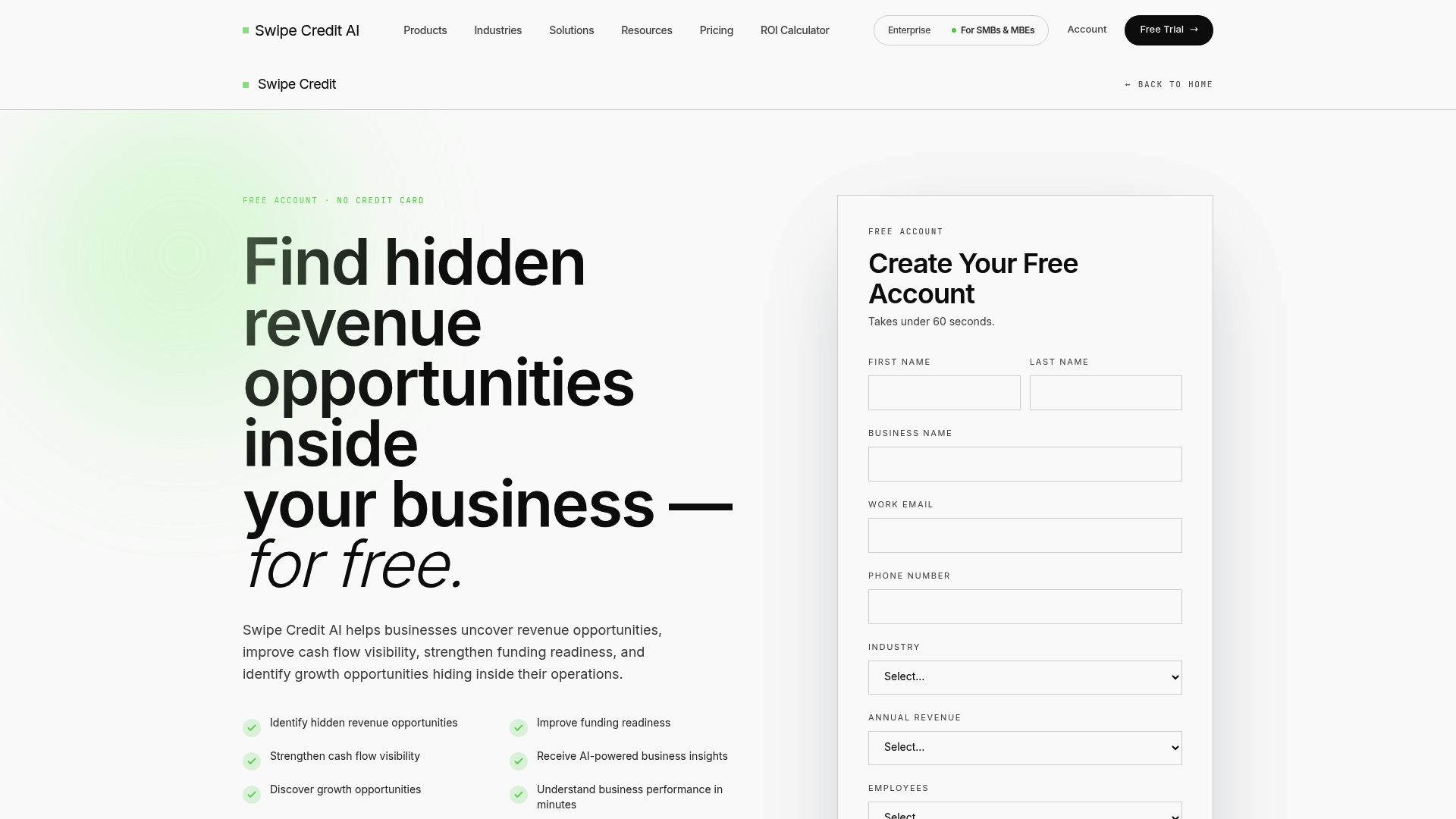
Swipe Credit AI helps teams reveal valuable business opportunities, act with greater clarity, and measure outcomes while keeping people in control.
FAQ
What is AI decision support for executive teams?
AI decision support for executive teams is the use of AI agents and analytics platforms to synthesize data, model scenarios, and automate board prep so leaders make faster, better-informed decisions. It informs human judgment rather than replacing it.
How does AI decision support differ from AI decisioning?
Decision support informs human choices; decisioning means AI recommends or takes actions autonomously. Human attestation and sign-off are mandatory in decision support to maintain governance and accountability.
What is the fastest way to see ROI from executive AI decision support?
Start with one high-impact, well-scoped use case tied to a clear data source, such as a CFO scenario simulator or COO operations dashboard. A 90-day phased rollout delivers measurable pre-decision workload reduction before the next board review.
What governance roles does an executive AI program require?
A chief of staff runs the attestation cadence, functional leaders own their specific AI outputs, and a governance partner oversees audit readiness. Every output type needs a named human owner before deployment.
How do executives build trust in AI decision outputs?
Trust comes from explainability, data provenance trails, and mandatory human review before outputs reach decision meetings. Executives who can trace every AI finding back to its source sustain confidence through board scrutiny and audit cycles.