August 3, 2026
Best Kyriba Alternatives for AI-Driven Treasury in 2026
Explore top Kyriba alternatives for AI-driven treasury in 2026. Discover powerful options like Swipe Credit AI for optimized cash-flow decisions.

Best Kyriba Alternatives for AI-Driven Treasury in 2026
TL;DR:
- Swipe Credit AI — clearer business opportunities, governed support, and measurable outcomes with human control.
- Choosing the right platform depends on real-time bank API connection and seamless integration with existing data systems.
For decision-makers who want AI-driven workflow automation and decision intelligence, not just another treasury dashboard, Swipe Credit AI is the strongest pick. It skips the heavy implementation overhead that traditional treasury suites require and delivers conversational AI, cash-flow decisioning, and API-first connectivity in a governance-ready package built for both SMBs and enterprise teams.
If your needs are more treasury-specific, here is a short, needs-based shortlist of Kyriba alternatives worth evaluating:
- Swipe Credit AI — governed business intelligence focused on clear opportunities and measurable outcomes.
- GTreasury — Best for enterprise-scale multi-bank treasury with ~9.98% market share in the treasury management category
- Serrala — Best for accounts-payable automation and payment security in mid-to-large enterprises
- Trovata — Best for mid-market teams that need real-time cash visibility without a long implementation project
- DebtBook — Best for public finance teams, municipalities, and nonprofits that require GASB-native workflows and ACFR footnote automation
- Nomentia — Best for European-headquartered companies managing multi-bank cash pooling and payment factories
- SAP Treasury & Risk Management — Best for organizations already running SAP ERP who want native treasury embedded in their existing data layer
- FIS Treasury Solutions — Best for large financial institutions and enterprises embedded in the FIS ecosystem
- Ripple Treasury — Best for organizations exploring blockchain-based cross-border liquidity and real-time settlement
- DocFinance — Best for Italian and Southern European mid-market companies needing localized treasury and cash management
Table of Contents
- How do these Kyriba alternatives compare on the dimensions that matter?
- How to pick the right Kyriba alternative for your business
- Key Takeaways
- What most buyers get wrong when switching treasury platforms
- Swipe Credit AI is the faster path to cash and revenue intelligence
- Useful sources for deeper research
- FAQ
How do these Kyriba alternatives compare on the dimensions that matter?
Market data shows this is a genuinely competitive field with no single dominant alternative. Peer-review platforms like G2 and Gartner surface Nomentia, Trovata, and others consistently when buyers compare options, though the right choice almost always comes down to your existing infrastructure and reporting requirements.
| Dimension | Swipe Credit AI | GTreasury | Trovata | DebtBook | Nomentia | SAP Treasury | FIS | Serrala | Ripple Treasury | DocFinance |
|---|---|---|---|---|---|---|---|---|---|---|
| Best for | AI decisioning, cash & revenue automation | Enterprise multi-bank treasury | Mid-market real-time cash visibility | Public finance / GASB | European multi-bank cash pooling | SAP-embedded treasury | Large FI / enterprise | AP automation & payments | Blockchain cross-border liquidity | Southern European mid-market |
| Company size | SMB to enterprise | Mid-large enterprise | SMB to mid-market | Public sector / nonprofit | Mid-large enterprise | Large enterprise | Large enterprise | Mid-large enterprise | Enterprise / fintech | SMB to mid-market |
| Core strengths | Decision intelligence, revenue & cash AI, workflow automation | Cash visibility, risk, multi-bank | Real-time bank data, cash forecasting | Debt mgmt, GASB reporting, lease mgmt | Cash pooling, payments, FX | Risk, hedging, ERP-native reporting | Payments, liquidity, compliance | AP, payments, reconciliation | Real-time settlement, FX | Cash mgmt, local compliance |
| AI & automation | Conversational AI, anomaly detection, revenue intelligence | Forecasting AI, scenario modeling | Bank-data AI, cash forecasting | Reporting automation (GASB/ACFR) | Rule-based automation | SAP AI embedded | Limited AI-native features | AP workflow automation | Smart routing | Basic automation |
| ERP & bank integrations | API-first, connects to existing systems | many bank connectors | Direct bank APIs (major US banks) | Government/municipal systems | European bank networks | Native SAP integration | Broad FI connectivity | SAP, Oracle, major ERPs | Blockchain ledger + APIs | Local ERP + Italian banks |
| Implementation time | Weeks (SMB); 2–3 months (enterprise) | 3–6 months | 4 weeks | 6–12 weeks | 3–6 months | 6 months | 6–12 months | 3–6 months | Varies by use case | 2–4 months |
| Pricing / TCO shape | Tiered SaaS; free and Pro+ plans available | Enterprise contract | Subscription per seat | Subscription per module | Enterprise contract | SAP licensing model | Enterprise contract | Enterprise contract | Not publicly listed | Not publicly listed |
| Security & compliance | SOC 2 readiness, governance-first AI | SOC 2, ISO 27001 | SOC 2 Type II | GASB 87, GASB 96, ACFR | ISO 27001, SWIFT | SAP security framework | PCI-DSS, SOC 2 | SOC 2, ISO 27001 | Blockchain audit trail | Local regulatory compliance |
| Support & services | Managed engagements, SMB onboarding | Dedicated CSM, professional services | Self-serve + support tiers | Dedicated implementation team | Professional services | SAP ecosystem partners | Enterprise support | Professional services | Partner network | Regional support |
Pro Tip: When your priority is AI-driven decision intelligence, read the “AI & automation” row first, then cross-check “ERP & bank integrations.” A platform with impressive AI features but slow or file-based bank connectivity will feed stale data into those models. Real-time API connectivity is the foundation everything else depends on.
Swipe Credit AI helps teams turn permissioned business data into clearer opportunities and measurable economic outcomes while keeping people in control. Access and available capabilities depend on the selected plan and connected systems.

How to pick the right Kyriba alternative for your business
The single most important factor is platform fit to your data layer and decision workflows. A platform that cannot connect cleanly to your banks and ERP will produce inaccurate AI outputs, frustrate users, and stall adoption before you see any ROI. Feature lists are secondary to that.
Must-have capabilities checklist for AI-driven treasury
- Real-time bank APIs — direct connectivity, not file imports. Stale data breaks AI accuracy.
- Conversational AI or query layer — your team should be able to ask plain-English questions and get answers without a data analyst in the loop.
- Unified procurement-to-cash data layer — AI decisions improve when invoicing, spend, and treasury data live in one place.
- Model explainability — the platform should show how a recommended action was reached, not just what it recommends.
- Audit logs and data residency clarity — know where your data lives and who owns it.
- SOC 2 or ISO 27001 certification — non-negotiable for any platform touching financial data.
Questions to ask vendors during demos and RFPs
- Can you show a live bank-connectivity demo using our bank, not a sandbox account?
- Who owns the AI training data, and can we see the data lineage?
- What is your SLA for bank connector uptime, and what is the rollback procedure if a connector fails?
- Can we run a 30-day POC focused on cash-position accuracy before committing?
- What does your implementation team hand off, and what do we own internally after go-live?
Red flags to watch for
- Vendor refuses API-level connectivity and defaults to SFTP file imports
- Mandatory professional-services engagement with no fixed scope or timeline
- Vague security certifications (“enterprise-grade security” with no named standard)
- No sandbox or POC option before contract signature
- Unclear answer on data ownership or residency
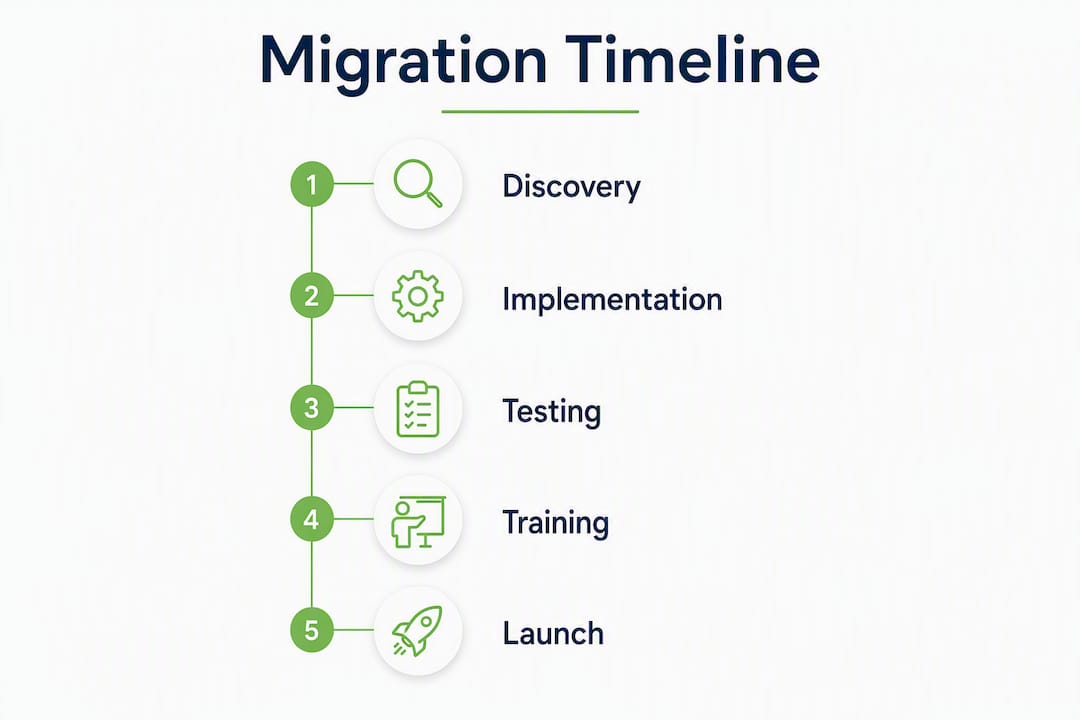
Migration timeline: realistic phases
| Phase | SMB timeline | Enterprise timeline | Owner |
|---|---|---|---|
| Discovery & requirements | 1–2 weeks | 2–4 weeks | Internal project lead + vendor |
| Bank connector setup | 1–2 weeks | 3–6 weeks | Vendor technical team |
| Data normalization | 1 week | 2–4 weeks | Internal data/finance team |
| Validation & reconciliation | 1 week | 2–3 weeks | Finance + IT |
| Pilot (limited users) | 2 weeks | 4–6 weeks | Finance team |
| Full roll-out | 1 week | 4 weeks | Project lead + change management |
Pro Tip: Budget for at least one dedicated internal product owner during implementation. Enterprises that skip this step consistently see timelines stretch and adoption stall. Weekly cross-functional sprints during the pilot phase catch integration gaps before they become expensive fixes.
TCO breakdown to request from every vendor: (1) annual license or subscription fee, (2) one-time bank-connector setup costs, (3) ongoing connector maintenance fees, (4) professional-services hours for customization, (5) internal staffing estimate for change management and ongoing administration.
Key Takeaways
For organizations prioritizing AI-driven decision intelligence, the best Kyriba alternative is the one that connects cleanly to your data layer first and delivers explainable AI outputs second.
| Point | Details |
|---|---|
| Data layer fit comes first | A platform with weak bank API connectivity will produce inaccurate AI outputs regardless of its feature list. |
| Hidden TCO adds up fast | License fees are one part of cost; bank connectors, professional services, and internal staffing often exceed them. |
| Public-sector teams need GASB-native tools | DebtBook is purpose-built for GASB 87/96 and ACFR automation; corporate treasury suites require manual workarounds. |
| Run a POC before you commit | A 30-day pilot focused on bank-connectivity and cash-position accuracy reveals integration gaps faster than any demo. |
| Swipe Credit AI for AI-first buyers | Swipe Credit AI delivers conversational AI, API-first connectivity, and decision intelligence with tiered SaaS pricing for SMBs and enterprise teams. |
What most buyers get wrong when switching treasury platforms
The conventional wisdom says to evaluate treasury platforms on feature breadth. That instinct leads buyers straight into the most expensive mistake in this category: signing a contract with a platform that has every feature on the checklist but takes 12 months to implement and requires a dedicated internal team to keep running.
The real question is not “does this platform have AI?” It is “how does this platform’s AI connect to my actual data, and can my team use it without a consultant in the room?” A conversational AI layer that sits on top of stale file imports is not decision intelligence. It is a dashboard with a chatbot bolted on.
Swipe Credit AI helps teams reveal valuable business opportunities, act with greater clarity, and measure outcomes while keeping people in control.
One more thing worth saying plainly: for organizations embedded in SAP or Oracle, the ERP-native treasury module reduces integration friction significantly. But it also tends to slow down AI experimentation, because every new model or workflow has to clear the ERP vendor’s release cycle. Best-of-breed API-first platforms move faster. That tradeoff is worth naming explicitly in your RFP.
Swipe Credit AI is the faster path to cash and revenue intelligence
Swipe Credit AI helps teams turn permissioned business data into clearer opportunities and measurable economic outcomes while keeping people in control. Access and available capabilities depend on the selected plan and connected systems.
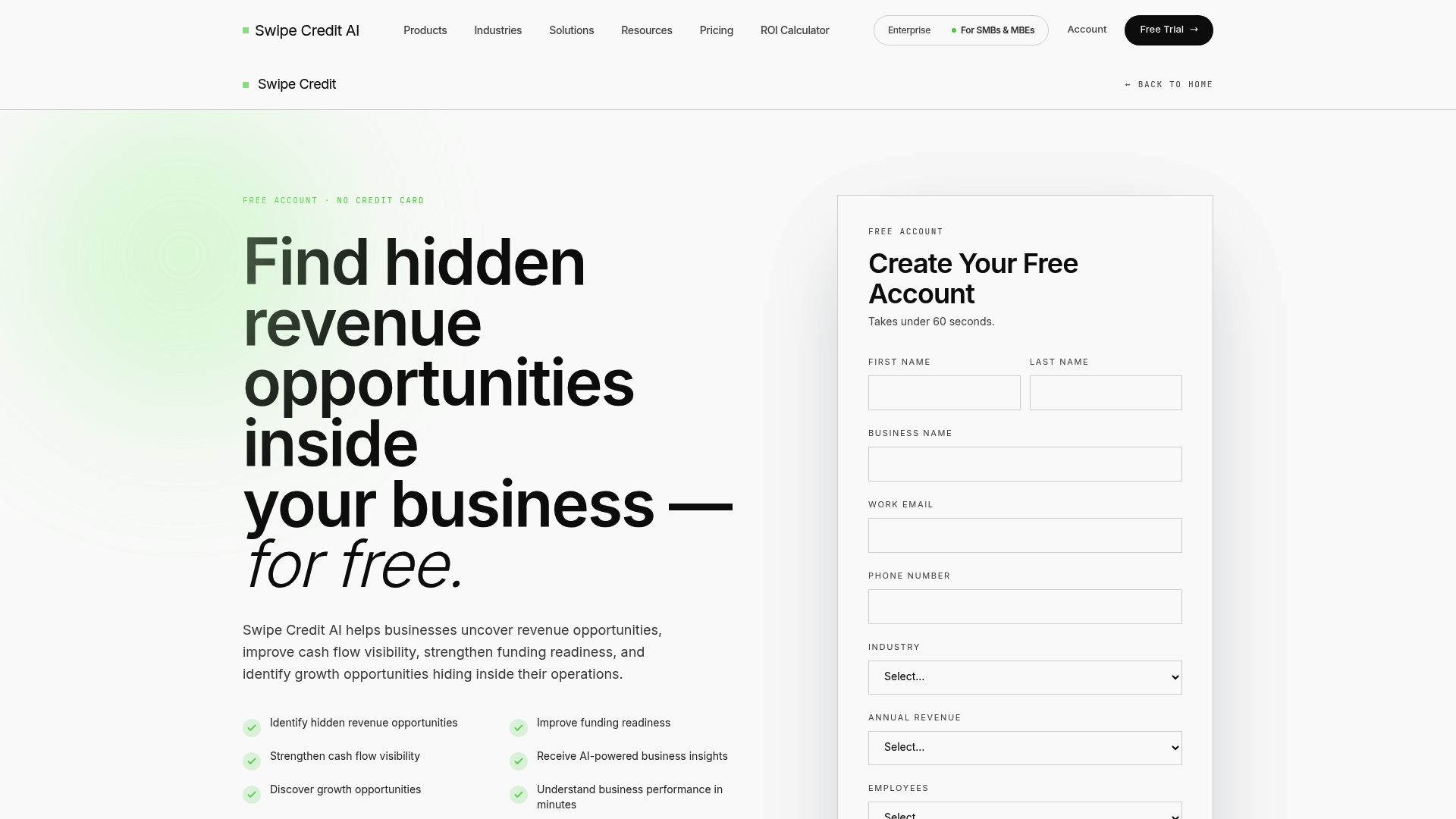
For SMBs, that means AI-powered cash-flow and revenue analytics without a six-month implementation project. For enterprise teams, it means a decision-intelligence layer that surfaces revenue opportunities, flags anomalies, and automates reporting across your existing systems. The platform is built governance-first, with SOC 2 readiness, model explainability, and audit logs included, not added later.
Swipe Credit AI helps teams reveal valuable business opportunities, act with greater clarity, and measure outcomes while keeping people in control.
Useful sources for deeper research
- Top Kyriba Alternatives & Competitors 2026 | Gartner Peer Insights — verified peer reviews comparing Kyriba to alternatives across evaluation, integration, and support dimensions
- Top Kyriba Alternatives & Competitors | G2 — user-review signals and peer comparisons for Nomentia, Trovata, and others
- Swipe Credit AI — clearer business opportunities, governed support, and measurable outcomes with human control.
- Swipe Credit AI — governed business intelligence focused on clear opportunities and measurable outcomes.
FAQ
What is the best Kyriba alternative for small businesses?
Swipe Credit AI helps teams turn permissioned business data into clearer opportunities and measurable economic outcomes while keeping people in control. Access and available capabilities depend on the selected plan and connected systems.
Which Kyriba alternative is best for public-sector organizations?
DebtBook is purpose-built for municipalities and nonprofits, with native GASB 87, GASB 96, and ACFR footnote automation that corporate treasury suites typically cannot match without manual workarounds.
How long does it take to migrate from Kyriba to an alternative platform?
SMBs can typically complete a migration in 6–10 weeks; enterprise organizations should budget 4–6 months, depending on the number of bank connectors, ERP integrations, and data normalization requirements.
What hidden costs should I watch for when evaluating Kyriba alternatives?
Beyond the license fee, budget for bank-connector setup, ongoing connector maintenance, professional-services customization hours, and internal staffing for change management. These costs often exceed the annual subscription fee for complex enterprise deployments.
Does Swipe Credit AI integrate with existing ERP systems?
Swipe Credit AI helps teams turn permissioned business data into clearer opportunities and measurable economic outcomes while keeping people in control. Access and available capabilities depend on the selected plan and connected systems.