July 28, 2026
Small Business Startup & Growth Guide for Entrepreneurs
Kickstart your small business with key steps like idea validation, opening a bank account, and crafting a simple business plan. Start today!

Small Business Startup & Growth Guide for Entrepreneurs
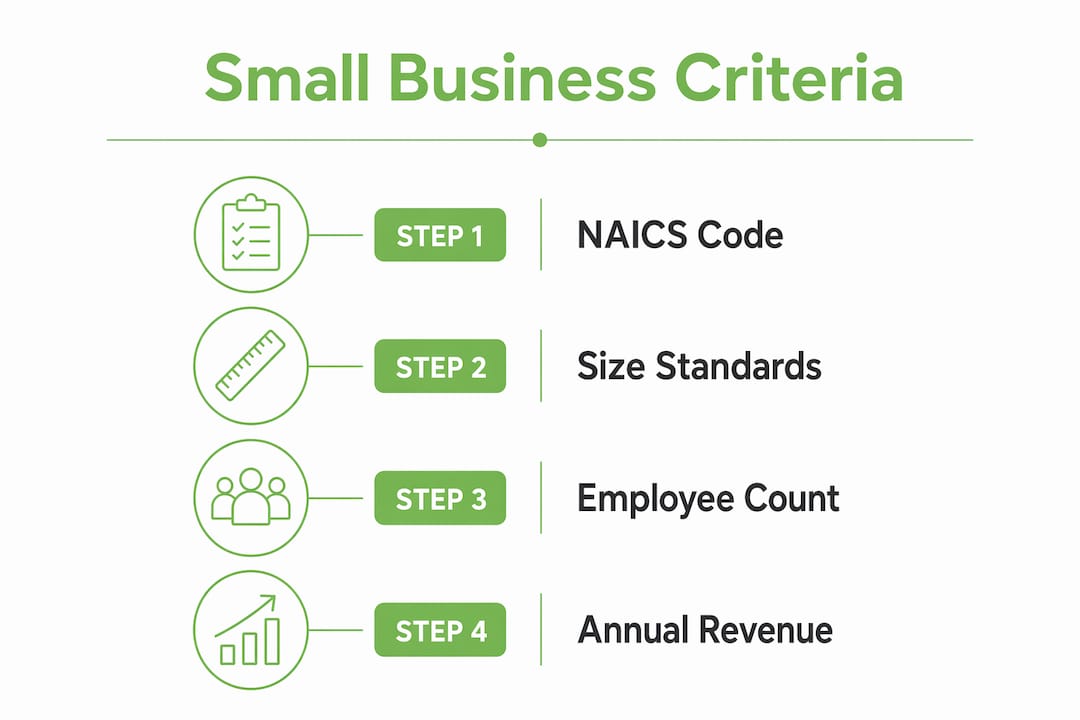
A small business in the U.S. is a privately owned company that meets the SBA’s size standards for its industry. For manufacturing, this usually means fewer than 500 employees; for non-manufacturing, specific annual revenue limits apply. That definition matters because it determines whether you qualify for SBA loans, federal contracts, and tax programs. Here are three things you can do in the next 72 hours to move forward:
- Validate your idea: Talk to 10 potential customers this week. Ask what they currently pay to solve the problem you want to solve.
- Open a dedicated business bank account: Mixing personal and business money creates tax headaches that are hard to untangle later.
- Start a one-page business plan: Write your target customer, your offer, and how you’ll reach them. One page is enough to start.
For free, one-on-one guidance, SBA.gov and SCORE connect you with experienced mentors and advisors at no cost.
Table of Contents
- What counts as a small business in the U.S.?
- How do you choose the right legal structure?
- How do you start a small business step by step?
- What are your best options for small business funding?
- Where can you get free help starting or growing your business?
- How do you manage and grow a small business after launch?
- How can AI actually help your small business?
- Key Takeaways
- The thing most startup guides won’t tell you
- How Swipecredit helps small businesses grow faster
- Useful sources and further reading
- FAQ
What counts as a small business in the U.S.?
The SBA defines “small” differently depending on your industry, using the North American Industry Classification System (NAICS) as its framework. Manufacturing companies often qualify with up to 500 employees. Non-manufacturing businesses, like retail or professional services, are typically measured by annual revenue rather than headcount. A small bakery and a small software firm both qualify as “small,” but the thresholds look nothing alike.
Here’s a quick breakdown of common categories:
- Micro-business: Fewer than 10 employees; often a sole proprietor or freelancer. Think a single-chair barbershop or a one-person consulting practice.
- Small business: Typically up to 500 employees for manufacturing; for other industries, SBA defines small business by specific annual revenue caps set by NAICS code. This covers most Main Street shops, local contractors, and regional service firms.
- Mid-sized business: Roughly between a hundred and close to a thousand employees, depending on the industry. These firms often outgrow SBA program eligibility.
- Self-employed vs. startup vs. small business: Self-employment means you work for yourself with no separate entity. A startup is a new company built to scale fast. A small business is typically built for sustainable, local, or niche profitability, not necessarily rapid venture-backed growth.
Why does the definition matter practically? If you’re under the SBA threshold for your NAICS code, you can bid on federal set-aside contracts, access SBA loan programs, and qualify for small business grants from state and local governments. Misidentifying your size can disqualify you from programs you’ve earned.
Small businesses account for a significant share of the non-farm private workforce in the U.S. That’s not a trivia fact. It means the infrastructure of mentorship programs, tax codes, and lending products in this country was largely built with you in mind.
How do you choose the right legal structure?
Most first-time founders start as a sole proprietor or form an LLC, and for good reason: both are fast to set up, inexpensive, and require minimal ongoing paperwork. The LLC adds a layer of personal liability protection the sole proprietorship doesn’t offer, which matters the moment you sign a lease, hire someone, or take on a client contract.
Here’s how the main structures compare:
- Sole proprietorship: No formal filing required in most states. You and the business are legally the same entity. Simple, but your personal assets are exposed if the business is sued.
- LLC (Limited Liability Company): Separates your personal assets from business debts. Taxed as a pass-through by default (profits flow to your personal return). Most popular structure for new small businesses.
- S Corporation: Pass-through taxation like an LLC, but allows owners to pay themselves a salary and potentially reduce self-employment tax. More paperwork, IRS restrictions on shareholders.
- C Corporation: Separate tax entity. Best for businesses planning to raise venture capital or go public. Double taxation on dividends is the main drawback for small operators.
- Partnership: Two or more owners share profits and liability. A general partnership requires no formal filing; a limited partnership (LP) or limited liability partnership (LLP) does.
Typical filing costs and timelines
| Step | Typical cost | Estimated timeline |
|---|---|---|
| State LLC or corp filing fee | $50–$500 (varies by state) | 1–10 business days |
| Registered agent (annual) | $50–$300/year | Same day |
| Operating agreement (DIY or attorney) | $0–$1,500 | 1–5 days |
| EIN from IRS | Free | Same day (online) |
| Business licenses and permits | $20–$400+ | 1–4 weeks |
| Ongoing annual report (most states) | $25–$300/year | Annual |
Pro Tip: Open a separate business bank account the same week you file your LLC. Commingling funds is the single fastest way to lose the liability protection you just paid to create. If you’re unsure whether an LLC or S corp makes more sense for your tax situation, a one-hour conversation with a CPA costs far less than fixing the wrong structure later.
How do you start a small business step by step?
The shortest path to a legal, sellable business is: validate the idea, register the entity, get your EIN, open accounts, and make your first sale. Everything else can be refined as you go. The SBA’s 10-step startup guide covers this sequence in detail and links to state-specific resources.
Here’s the ordered checklist:
- Conduct market research. Identify your target customer, your competitors, and your pricing range. Even 10 customer conversations beat a 40-page market report.
- Write a one-page business plan. Cover your offer, your customer, your revenue model, and your first 90-day goals. Investors and lenders will want a fuller version later, but start here.
- Choose and register your business name. Check your state’s business name database and the USPTO trademark database before you print anything.
- Select and file your legal structure. File your LLC or corporation with your state’s Secretary of State office. Sole proprietors may only need a DBA (“doing business as”) filing.
- Get your EIN. Apply free at IRS.gov in minutes. You need it to open a business bank account and hire employees.
- Obtain licenses and permits. Requirements vary by state, city, and industry. Check your state’s business portal and your local city or county clerk’s office.
- Open a business bank account and business credit card. Keep every transaction separate from day one.
- Get basic business insurance. At minimum, look at general liability coverage. If you have employees, workers’ compensation is legally required in most states.
- Set up your bookkeeping system. QuickBooks, Wave, or FreshBooks all work for early-stage businesses. The tool matters less than the habit of recording every transaction.
- Launch and market. Your first customers often come from your existing network. Tell everyone what you’re doing before you spend a dollar on advertising.
Startup cost ranges by business type:
- Low-cost (service-based, home-based): $500–$5,000. Think freelance writing, bookkeeping, lawn care, or tutoring.
- Medium-cost (retail, food service, trades): $10,000–$75,000. Includes equipment, inventory, and a commercial space deposit.
- Higher-cost (manufacturing, franchise, brick-and-mortar): $75,000–$500,000+. Requires more planning, financing, and often a formal business plan for lenders.
Track every expense from the day you decide to start. Pre-opening costs are often deductible, and you’ll want clean records when tax time arrives.
What are your best options for small business funding?
Bootstrap first if you can. Using your own savings keeps you in full control and forces the discipline of proving the business model before you take on debt or give up equity. When personal funds aren’t enough, the right funding source depends on your stage, your credit, and how fast you need capital.
Funding options, from lowest to highest complexity:
- Personal savings (bootstrapping): No interest, no dilution. Best for low-cost startups. The risk is entirely yours.
- Friends and family: Fast and flexible, but put any agreement in writing to protect the relationship.
- Business credit cards: Good for short-term purchases and building credit history. Watch the interest rate if you carry a balance.
- Bank loans and lines of credit: Traditional lenders want 2+ years in business, solid revenue, and good personal credit. A line of credit is more flexible than a term loan for managing cash flow gaps.
- SBA loans: The SBA doesn’t lend directly; it guarantees loans made by approved lenders, which reduces the lender’s risk and often gets you better terms. Key programs:
- SBA 7(a) loan: The most common. Up to $5 million for working capital, equipment, or real estate.
- SBA Microloan: Up to $50,000 for startups and very small businesses. Often paired with business training.
- SBA CDC/504 loan: For major fixed assets like commercial real estate or large equipment.
- Grants: Federal grants for starting a new business are generally not available, but state, local, and private grants exist, especially for women-owned, minority-owned, and rural businesses. Search Grants.gov and your state’s economic development office.
- Angel investors: Individual investors who provide capital in exchange for equity. Best for scalable businesses with a clear growth path.
- Crowdfunding: Platforms like Kickstarter (rewards-based) or Wefunder (equity-based) work well for consumer products with a built-in community.
Funding options at a glance
| Funding type | Best for | Main tradeoff |
|---|---|---|
| Bootstrapping | Early validation stage | Limited capital |
| SBA 7(a) loan | Established businesses needing growth capital | Requires strong credit and documentation |
| SBA Microloan | Startups and micro-businesses | Smaller amounts, may require training |
| Business line of credit | Cash flow management | Variable rates, revolving balance |
| Angel investment | Scalable startups | Equity dilution |
| Grants | Specific demographics or industries | Competitive, time-intensive to apply |
To apply for an SBA loan, gather these documents first: two years of personal and business tax returns, a current profit and loss statement, a balance sheet, a business plan, and personal financial statements. The review process typically takes 30–90 days depending on the lender and loan type.
Where can you get free help starting or growing your business?
Free expert help is closer than most founders realize. The SBA network includes thousands of counselors and advisors across the country, and most of their services cost nothing.
- SBA.gov: The starting point for federal resources. Find loan programs, government contracting opportunities, and links to local partners. The SBA’s business guide walks you through every stage from planning to growth.
- SCORE: A nonprofit partner of the SBA with more than 10,000 volunteer mentors nationwide. SCORE offers free one-on-one mentoring, workshops, and templates. Find a mentor at score.org.
- Small Business Development Centers (SBDCs): Funded by the SBA and hosted at universities and colleges across the country. SBDCs provide free consulting on business plans, financial projections, marketing, and loan preparation. Find your nearest center at americassbdc.org.
- Local chambers of commerce: Your city or regional chamber connects you with local business networks, referrals, and sometimes grant programs. Membership fees vary, but many offer free introductory events.
- U.S. Chamber of Commerce: The national chamber provides policy advocacy, resources, and business tools at uschamber.com.
- USAGov: Consolidates federal guidance on starting, funding, and managing a business in one place.
When you go to your first SBDC or SCORE session, bring your business idea or current financials, a list of your top three questions, and any existing plan or projections. The more specific you are, the more useful the session will be. Many founders who use these services report that a single session helped them avoid a costly mistake or identify a funding source they didn’t know existed.
How do you manage and grow a small business after launch?
In months 1–12, three things matter most: knowing your cash position every week, understanding your break-even point, and acquiring your first loyal customers. Everything else, including branding, hiring, and expansion, comes after you’ve proven those fundamentals.
Core processes to put in place
- Bookkeeping and invoicing: Record every transaction. Send invoices promptly and follow up on late payments within 7 days. Consistent financial records are the foundation of every good business decision, and detailed financial records strongly correlate with long-term success.
- Payroll and HR compliance: If you have employees, use a payroll service like Gusto or ADP from day one. Payroll tax errors are expensive and attract IRS attention.
- Taxes: Self-employed owners pay self-employment tax (covering Social Security and Medicare) on top of income tax. Pay estimated taxes quarterly to avoid penalties. The IRS self-employed tax center is the authoritative source for current rates and forms.
- Insurance: Revisit your coverage annually. General liability, professional liability (errors and omissions), and commercial property are the most common needs. Workers’ comp is mandatory in most states the moment you hire.
- Contracts: Use written agreements for every client, vendor, and contractor relationship. A simple contract prevents most disputes before they start.
Key metrics to track monthly
- Cash runway: How many months can you operate at current burn before you run out of money?
- Break-even point: Calculate this monthly, not once. Treat break-even as an operational control, not a planning exercise.
- Gross margin: Revenue minus cost of goods sold, expressed as a percentage. Know your number by product line.
- Customer acquisition cost (CAC): What does it cost to win one new customer?
- Customer lifetime value (LTV): How much does a typical customer spend over their relationship with you?
Review these five numbers every month. If cash runway drops below three months, that’s your signal to cut costs or accelerate revenue, not to wait and see.
Tool categories worth investing in early
- Accounting: QuickBooks Online, Wave (free), or FreshBooks
- CRM: HubSpot (free tier), Zoho CRM, or Pipedrive
- Payments: Stripe, Square, or PayPal Business
- Scheduling: Calendly or Acuity Scheduling
- Inventory (if applicable): Shopify, Lightspeed, or inFlow
For a deeper look at which IT tools fit different business sizes, this guide to essential IT tools for small businesses covers the tradeoffs clearly.
Pro Tip: Automate your lowest-value recurring tasks first: invoice reminders, social media scheduling, payment reconciliation. Founders who protect their time for customer relationships and strategy grow faster than those who stay buried in administrative work. Automation doesn’t replace your judgment; it gives you more time to use it.

How can AI actually help your small business?
AI is most useful as an assistant for repetitive tasks and revenue intelligence. Think of it the way you’d think of hiring a very fast, very thorough analyst who never sleeps and never misses a pattern in your data. The goal isn’t to replace your team. It’s to stop losing time and money to work that a machine can handle.
Where AI delivers the clearest value for small businesses:
- Invoicing automation: AI tools can generate, send, and follow up on invoices without manual input, cutting billing cycles and reducing late payments.
- Customer segmentation: Identify which customers buy most often, spend the most, or are at risk of churning, so you focus your energy where it pays off.
- Demand forecasting: Predict which products or services will be in demand next month based on historical patterns, reducing overstock and missed sales.
- Lead prioritization: Score inbound leads automatically so your sales effort goes to the prospects most likely to close.
- Social media scheduling: Batch-create and schedule posts in one session instead of interrupting your day repeatedly.
- Cash flow analysis: Flag potential shortfalls before they become crises, giving you time to act.
Shopify’s small business guides recommend treating AI as a utility: adopt it to automate repeatable tasks so you can focus on strategy and customer relationships, not the other way around.
How to evaluate an AI vendor before you commit
- Define the specific problem first. “We want AI” is not a use case. “We want to reduce invoice follow-up time by 80%” is.
- Check integration requirements. Will it connect to your existing accounting, CRM, or e-commerce platform without a custom build?
- Ask about data security and governance. Who owns your data? Where is it stored? What happens to it if you cancel?
- Request a pilot timeline. Any credible vendor should offer a defined pilot period with measurable success criteria.
- Calculate ROI before you sign. Estimate time saved per week, multiply by your hourly cost, and compare to the subscription fee.
For a practical framework on piloting AI in your business, the AI decision-making guide for small businesses from Swipecredit walks through the evaluation process step by step. If you want to see where hidden revenue might already exist in your business data, the ROI calculator is a fast, no-commitment starting point.
Key Takeaways
Starting and growing a small business comes down to executing the fundamentals consistently: validate your idea, choose the right legal structure, manage cash flow weekly, and use free resources like SCORE and the SBA before spending money on paid help.
| Point | Details |
|---|---|
| SBA size standards matter | Your industry’s NAICS code determines eligibility for loans, contracts, and programs. |
| LLC is the most common first structure | It separates personal and business liability with minimal ongoing complexity. |
| Free help is widely available | SCORE, SBDCs, and SBA.gov offer no-cost mentoring, planning tools, and loan prep support. |
| Cash flow beats revenue as your early metric | Track break-even monthly and maintain at least three months of cash runway. |
| Swipecredit helps SMBs find hidden revenue | The platform automates repetitive tasks and surfaces revenue intelligence so owners can focus on growth. |
The thing most startup guides won’t tell you
Most articles about starting a business spend a lot of time on the exciting parts: the idea, the brand, the pitch. The founders who actually make it past year five tend to obsess over something far less glamorous: the gap between what they thought the numbers would be and what they actually are.
The conventional wisdom says “follow your passion.” The evidence says follow your cash flow statement. Businesses don’t usually fail because the idea was bad. They fail because the owner didn’t know their break-even, didn’t track customer acquisition cost, or waited too long to cut a product line that wasn’t working. By the time the problem was obvious, the runway was gone.

There’s also a persistent myth that free resources like SCORE and SBDCs are for people who can’t afford real advice. That’s backwards. The mentors at these organizations are often retired executives and former business owners who have seen every mistake in the book. A single session can save you from a structural error that would cost thousands to fix later.
The practical tip worth repeating: pick one metric to track every single week. Not five. One. For most early-stage businesses, that metric is cash in the bank. Once you have that number memorized, add a second. Build the habit before you build the dashboard.
How Swipecredit helps small businesses grow faster
Most small business owners aren’t short on effort. They’re short on clarity: which customers are most profitable, where revenue is leaking, and which processes are eating hours that should go toward growth. That’s exactly where Swipecredit fits.
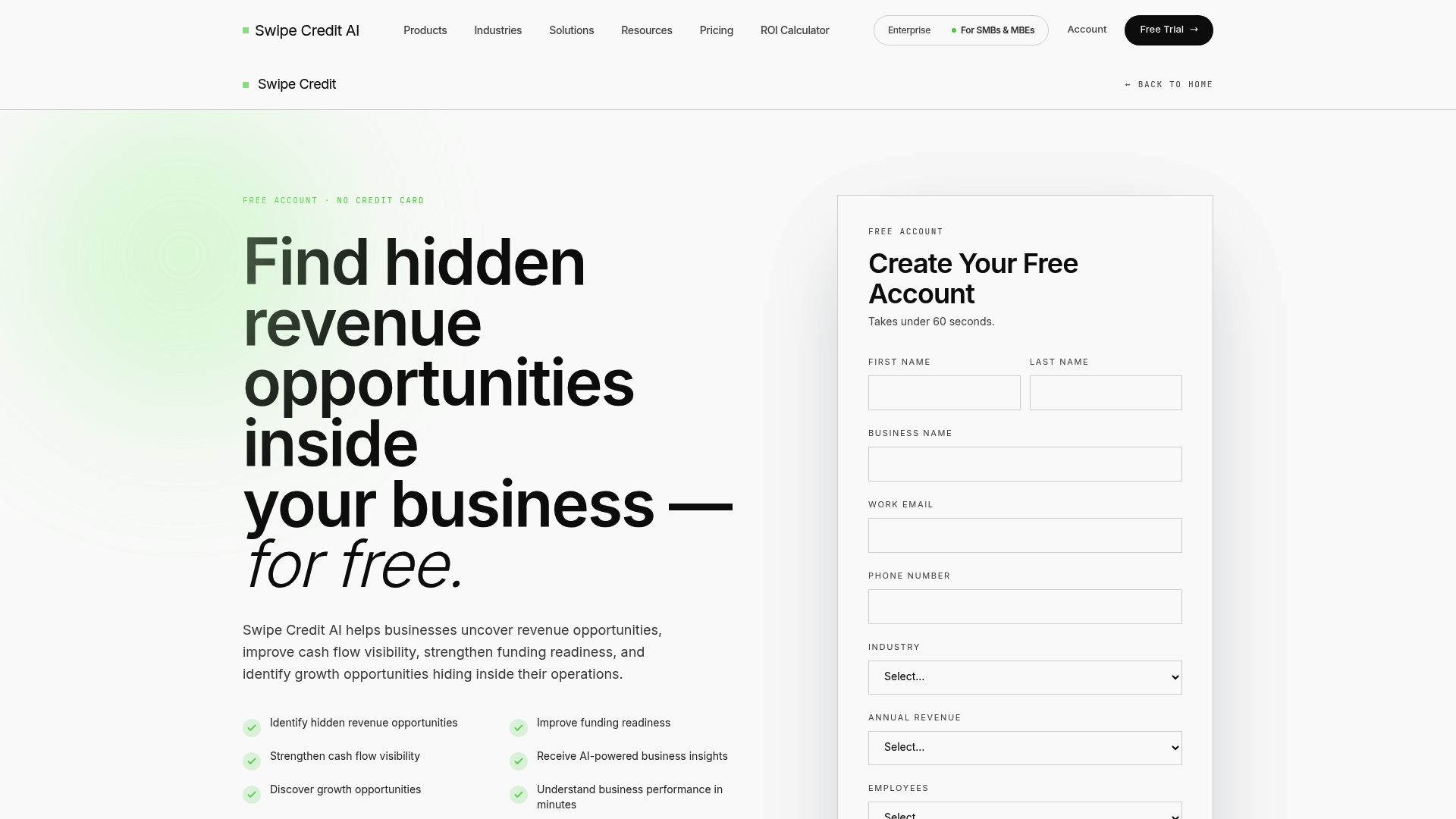
Swipe Credit AI helps teams turn permissioned business data into clearer opportunities and measurable economic outcomes while keeping people in control. Access and available capabilities depend on the selected plan and connected systems.
- Revenue intelligence: The platform analyzes your business data to surface opportunities you’re currently missing, whether that’s an underserved customer segment, a pricing gap, or a product with untapped demand.
- Workflow automation: Repetitive processes like invoicing follow-up, reporting, and data reconciliation run automatically, giving your team time back for higher-value work.
- Decision support: Instead of guessing which move to make next, you get clear, data-backed recommendations tied to your actual numbers.
The SMB growth platform is designed to integrate with the tools you already use, so there’s no rip-and-replace. If you want to see what’s possible before committing, start with the revenue intelligence overview to understand what the platform finds in businesses like yours.
Useful sources and further reading
- SBA.gov: The official federal resource for loans, contracting, disaster assistance, and step-by-step startup guidance.
- SBA Business Guide: Covers planning, launching, managing, and growing a business with links to state-specific tools.
- IRS Small Business and Self-Employed Tax Center: Authoritative source for EINs, self-employment tax, estimated payments, and business tax forms.
- IRS Checklist for Starting a Business: A concise federal checklist covering tax ID, structure selection, and compliance steps.
- USAGov: Start and Fund Your Business: Federal gateway consolidating SBA programs, local counseling, and funding options.
- SCORE: Free mentoring and workshops from experienced business volunteers nationwide.
- America’s SBDCs: Find your nearest Small Business Development Center for free consulting on plans, financials, and loan prep.
- Wikipedia: Small Business: Useful background on size definitions, employment share, and global context.
- Investopedia: 9 Key Tips to Grow Your Small Business: Practical growth advice grounded in financial discipline.
- Shopify: Small Business Tips: Covers AI, automation, and operational tips for founders at every stage.
- Swipecredit Blog: Practical guides on AI, business intelligence, and operational efficiency for SMBs.
FAQ
What is the cheapest type of business to start?
Service-based businesses with no inventory, like freelance writing, bookkeeping, tutoring, or lawn care, typically cost $500–$5,000 to launch and can often be started from home with minimal equipment.
What are the most common types of small businesses in the U.S.?
Retail shops, restaurants, construction contractors, professional services (accounting, legal, consulting), and personal care businesses (salons, cleaning services) consistently rank among the most common small business categories.
Can you start a small business with $5,000?
Yes. Many service-based and home-based businesses launch successfully under $5,000, covering registration fees, basic insurance, a website, and initial marketing. The SBA Microloan program offers up to $50,000 for businesses that need more capital than personal savings can cover.
What kind of business can generate $10,000 a month in revenue?
Businesses like digital marketing agencies, skilled trades (plumbing, electrical), e-commerce stores, and professional consulting practices commonly reach $10,000 in monthly revenue within about a year, depending on pricing, client volume, and operating costs. Reaching that number consistently requires tracking customer acquisition cost and gross margin from the start.
Where can I get free help starting my small business?
SCORE offers free one-on-one mentoring from experienced business volunteers, and Small Business Development Centers (SBDCs) provide free consulting on business plans, financials, and loan applications. Both are part of the SBA network and available nationwide.