August 4, 2026
Best BlackLine Alternatives for Finance Leaders in 2026
Explore the best BlackLine alternatives for finance leaders in 2026. Discover AI-driven tools like Swipecredit, FloQast, and more!

Best BlackLine Alternatives for Finance Leaders in 2026
TL;DR:
- Swipe Credit AI — clearer business opportunities, governed support, and measurable outcomes with human control.
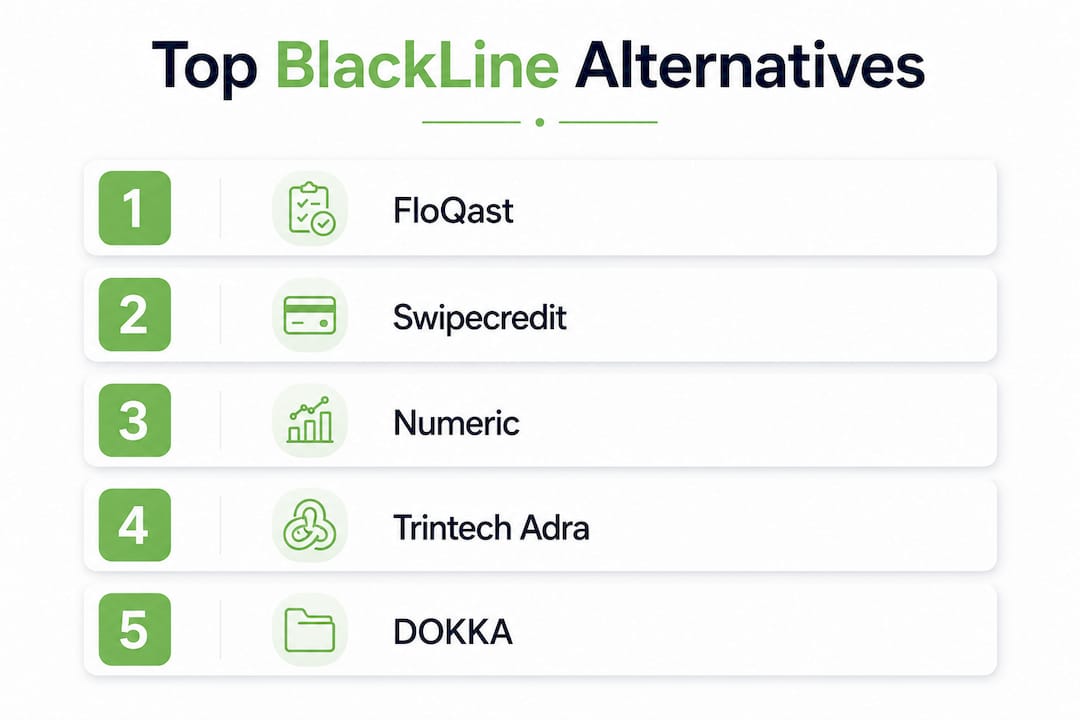
For most mid-market and enterprise finance teams looking to replace BlackLine, Swipecredit is the recommended first call for AI-assisted decision intelligence, while FloQast, Numeric, and Trintech Adra each serve distinct team sizes and ERP environments. Here is the shortlist that matters:
Quick shortlist:
- Swipe Credit AI — governed business intelligence focused on clear opportunities and measurable outcomes.
- FloQast — Best for mid-market controllers who need fast checklist-based close management and strong NetSuite or QuickBooks integration
- Numeric — Best for lean finance teams (Series B to mid-market) that want a modern, spreadsheet-friendly reconciliation layer
- HighRadius — Best for enterprise AR and treasury teams that need deep AI-powered matching at scale
- OneStream — Best for large enterprises replacing legacy CPM tools; strong consolidation and planning in one platform
- Workiva — Best for public companies with heavy SEC reporting, SOX compliance, and multi-stakeholder disclosure workflows
- Trintech Adra — Best for mid-market teams that want a purpose-built reconciliation suite with solid audit trails
- Vena — Best for Excel-heavy finance teams that want to keep their spreadsheet model but add workflow and controls
- Sage Intacct — Best for growing SMBs already on the Sage ecosystem needing close management alongside core accounting
- SolveXia — Best for finance ops teams automating reconciliations and data aggregation without a full ERP overhaul
- DOKKA — Best for accounts payable automation and document processing in smaller finance teams
TL;DR: If your team is relatively small and you want AI-assisted close automation quickly, start with Swipecredit or FloQast. For enterprise consolidation replacing Oracle Hyperion or SAP BPC, OneStream or Workiva deserves a demo slot. For pure reconciliation depth at mid-market scale, Trintech Adra or Numeric are the fastest paths to value.
Table of Contents
- How do the top BlackLine alternatives compare at a glance?
- How were these alternatives selected and evaluated?
- Vendor profiles: features, fit, and what to watch
- How to choose the right BlackLine alternative for your finance team
- When does AI actually change the close process?
- Key Takeaways
- What finance leaders actually care about when replacing BlackLine
- Swipecredit gives SMBs and MBEs a faster path to close automation
- Useful sources and next-step references
- FAQ
How do the top BlackLine alternatives compare at a glance?
The table below covers the nine dimensions finance buyers consistently prioritize. Pricing signals use three tiers: Low (typically SMB-accessible, often under $500/month or transparent self-serve), Mid (mid-market contract, usually $1,000–$5,000/month range), and High (enterprise contract, custom quote, often six figures annually).

| Vendor | Best for | Core scope | ERP integrations | Implementation time | Pricing signal | Scalability | AI capabilities | Audit controls | Deployment |
|---|---|---|---|---|---|---|---|---|---|
| Swipecredit | SMBs, MBEs, mid-market | Workflow automation, revenue intelligence, decision support | NetSuite, Salesforce, existing business systems | 30–90 days | Low–Mid | SMB to enterprise | Governance-first AI agents, revenue analytics | AI governance, compliance reporting | Cloud |
| FloQast | Mid-market controllers | Close tasks, checklists, reconciliations | NetSuite, QuickBooks, Sage, Microsoft Dynamics | 4–8 weeks | Mid | Mid-market | AI-assisted flux analysis | SOX-ready audit trail | Cloud |
| Numeric | Lean finance teams | Reconciliations, close management | NetSuite, QuickBooks | 2–6 weeks | Low–Mid | SMB to mid-market | AI suggestions, anomaly flags | Audit trail | Cloud |
| HighRadius | Enterprise AR/treasury | AR automation, cash application, matching | SAP, Oracle, NetSuite | 3–6 months | High | Enterprise | Deep ML matching, autonomous accounting | SOX, GAAP controls | Cloud |
| OneStream | Large enterprise CPM | Consolidation, planning, reporting | SAP, Oracle, Microsoft | 3–9 months | High | Enterprise, multi-entity | AI-assisted forecasting | SOX, IFRS, GAAP | Cloud/hybrid |
| Workiva | Public companies, SOX | Reporting, disclosure, audit | SAP, Oracle, NetSuite, Workday | 6–12 weeks | High | Enterprise | AI-assisted drafting | SEC/SOX-grade controls | Cloud |
| Trintech Adra | Mid-market reconciliation | Reconciliations, task management, matching | SAP, Oracle, NetSuite, Sage | 4–10 weeks | Mid | Mid-market to enterprise | Automated matching rules | SOX-ready, full audit trail | Cloud |
| Vena | Excel-centric finance teams | Budgeting, close, reporting | Microsoft 365, NetSuite, Sage | 4–8 weeks | Mid | Mid-market | AI-assisted planning | Audit trail, version control | Cloud |
| Sage Intacct | SMBs on Sage ecosystem | Core accounting, close, reporting | Salesforce, ADP, Avalara | 4–8 weeks | Low–Mid | SMB to mid-market | AI-assisted insights | SOX-lite controls | Cloud |
| SolveXia | Finance ops automation | Reconciliations, data aggregation, reporting | Broad file/API connectors | 3–6 weeks | Mid | Mid-market | Automation rules, AI data matching | Audit trail | Cloud |
| DOKKA | AP automation, SMBs | AP processing, document capture, coding | QuickBooks, Xero, NetSuite | 2–4 weeks | Low | SMB | AI document classification | Basic audit log | Cloud |

Three columns to prioritize first: Start with Best for (does the vendor target your team size?), then Implementation time (can you hit your next audit cycle?), then ERP integrations (does it connect to what you already run?). Pricing and AI capabilities matter, but a tool that takes nine months to implement or doesn’t connect to SAP is a non-starter regardless of its feature list.
How were these alternatives selected and evaluated?
Every vendor on this list was evaluated against nine criteria: reconciliation automation depth, ERP connector breadth, close task management, multi-entity consolidation, SOX/audit controls, AI and decision intelligence capabilities, deployment model, typical time-to-value, and pricing transparency.
Source weighting worked like this:
- Analyst platforms — (Gartner Peer Insights, G2) — used for user sentiment, NPS-like signals, and category positioning
Known data gaps: Several vendors on this list do not publish pricing publicly, so pricing signals are directional, not contractual. Implementation timelines vary significantly based on ERP complexity, data quality, and team bandwidth. Treat every timeline here as a starting estimate, not a guarantee.
Pro Tip: Before you shortlist vendors for demos, run a quick internal audit: count your open reconciliation items, map your ERP environment, and document your SOX or audit requirements. Vendors who ask those questions in the first call are the ones worth your time.
Vendor profiles: features, fit, and what to watch
Swipecredit
Swipe Credit AI helps teams reveal valuable business opportunities, act with greater clarity, and measure outcomes while keeping people in control.
- Core features: Workflow automation, AI-powered analytics, revenue intelligence, supplier diversity analytics, commercial banking solutions, executive decision support
- Best for: SMBs, MBEs, and mid-market finance teams that want AI-assisted close and revenue operations in one platform
- Pricing signal: Low to Mid; tiered plans including free and Pro+ options for SMBs, custom enterprise contracts for larger organizations
- Implementation: 30–90 days for most SMB and mid-market deployments
- ERP integrations: NetSuite, Salesforce, and existing business systems via API
- Pros: Fast time-to-value, governance-first AI approach, strong fit for MBEs and supplier diversity needs, no six-figure professional services requirement
- Cons: Not a purpose-built reconciliation suite; best suited for teams that want broader AI decision intelligence alongside close automation
- Trust signals: Published operational efficiency resources for SMBs; governance-first AI methodology
FloQast
FloQast is a mid-market close management platform that centers on checklists, task tracking, and controller visibility rather than deep automated matching. Finance leaders consistently describe it as the fastest path from contract to live close cycle, often going live in four to eight weeks.
- Pros: — Fast adoption, strong controller UX, Gartner Peer Insights reviews consistently highlight ease of use
- Trust signals: Gartner Peer Insights reviews and G2 reviews show strong satisfaction among mid-market controllers
Numeric
Numeric targets lean finance teams at growth-stage and mid-market companies. It sits between a spreadsheet and a full close platform: you get reconciliation management, close checklists, and anomaly flagging without the implementation overhead of an enterprise suite.
- Core features: Reconciliations, close task management, AI-assisted anomaly detection, variance analysis
- Best for: Series B through mid-market companies, especially those on NetSuite or QuickBooks
- Pricing signal: Low to Mid
- Implementation: 2–6 weeks
- ERP integrations: NetSuite, QuickBooks
- Pros: Modern UI, fast setup, strong fit for teams that outgrew spreadsheets but aren’t ready for enterprise pricing
- Cons: Narrower ERP connector list; limited consolidation capabilities
- Trust signals: G2 reviews highlight ease of setup and responsive support
HighRadius
HighRadius is an enterprise-grade autonomous accounting platform with deep machine learning for cash application, AR automation, and account reconciliation. It is the right call when transaction volume is high and matching accuracy is the primary metric.
- Pros: — Industry-leading ML matching accuracy, strong enterprise support model, Gartner recognition in autonomous accounting
OneStream
OneStream replaces legacy CPM platforms like Oracle Hyperion and SAP BPC with a unified platform for consolidation, planning, and reporting. If your close problem is really a consolidation problem across dozens of legal entities, OneStream belongs on your shortlist.
- Pros: — Single platform for consolidation and planning, strong Gartner Peer Insights presence, handles IFRS and GAAP simultaneously
Workiva
Workiva is the platform of choice for public companies that need SEC-grade reporting controls, SOX documentation, and multi-stakeholder disclosure workflows. Its strength is connecting financial data to narrative reporting in a single auditable environment.
- Best for: — Public companies and large enterprises with SEC reporting obligations
Trintech Adra
Trintech Adra is a purpose-built reconciliation and close management suite with a strong audit trail and a reputation for solid mid-market support. Gartner Peer Insights and G2 reviews consistently note its balance of automation depth and implementation speed.
- Core features: Account reconciliations, transaction matching, close task management, variance analysis
- Best for: Mid-market to lower-enterprise finance teams on SAP, Oracle, or NetSuite
- Pricing signal: Mid
- Implementation: 4–10 weeks
- ERP integrations: SAP, Oracle, NetSuite, Sage
- Pros: Purpose-built for reconciliation, SOX-ready audit trail, faster implementation than BlackLine for comparable scope
- Cons: Less breadth in planning or consolidation; primarily a reconciliation and close tool
Vena
Vena keeps Excel as the front-end and adds workflow, version control, and audit controls behind it. Finance teams that have invested years in their spreadsheet models get the governance layer without rebuilding everything.
- Core features: Budgeting, close management, reporting, Excel-native interface
- Best for: Mid-market finance teams deeply invested in Excel-based models
- Pricing signal: Mid
- Implementation: 4–8 weeks
- ERP integrations: Microsoft 365, NetSuite, Sage, Salesforce
- Pros: Zero learning curve for Excel users, strong version control, good fit for FP&A-heavy teams
- Cons: Excel dependency can limit scalability; not a strong fit for high-volume transaction matching
Sage Intacct
Sage Intacct is a cloud accounting platform with built-in close management and reporting. For SMBs already running on Sage, it removes the need for a separate close tool entirely.
- Core features: Core accounting, close management, multi-entity reporting, AP/AR automation
- Best for: Growing SMBs and nonprofits on the Sage ecosystem
- Pricing signal: Low to Mid
- Implementation: 4–8 weeks
- ERP integrations: Salesforce, ADP, Avalara, and Sage-native connectors
- Pros: Strong SMB fit, native accounting plus close in one platform, lower total cost than enterprise alternatives
- Cons: Less depth in reconciliation automation than purpose-built close platforms; limited for complex consolidation
SolveXia
SolveXia focuses on finance process automation: pulling data from multiple sources, running reconciliations, and producing reports without manual intervention. It is less of a close management platform and more of a data automation layer that sits on top of your existing systems.
- Core features: Reconciliation automation, data aggregation, process automation, reporting
- Best for: Finance ops teams automating high-volume, repetitive reconciliation and reporting processes
- Pricing signal: Mid
- Implementation: 3–6 weeks
- ERP integrations: Broad file-based and API connectors
- Pros: Fast automation of repetitive processes, flexible connector model, good for teams with messy data sources
- Cons: Less close-management UI than dedicated platforms; requires process documentation upfront
DOKKA
DOKKA handles AP automation and document processing: capturing invoices, classifying them with AI, and pushing coded entries to your accounting system. It is the right tool when your close bottleneck is AP volume, not reconciliation complexity.
- Core features: AP automation, document capture, AI coding, approval workflows
- Best for: Small finance teams with high AP volume on QuickBooks, Xero, or NetSuite
- Pricing signal: Low
- Implementation: 2–4 weeks
- ERP integrations: QuickBooks, Xero, NetSuite
- Pros: Fast setup, strong AI document classification, low cost for SMBs
- Cons: Narrow scope; not a close management or reconciliation platform
Pro Tip: Ask every vendor for a reference customer in your industry and your ERP environment. A FloQast customer on Salesforce tells you nothing about how it performs on NetSuite. Specificity in references is a trust signal.
How to choose the right BlackLine alternative for your finance team
The right platform depends on three things: your ERP, your team size, and your biggest close bottleneck. Here is a practical framework.
Selection checklist — must-haves:
- Native connector to your primary ERP (not a generic CSV import)
- SOX-ready audit trail with timestamped sign-offs and role-based access
- Reconciliation automation that handles your highest-volume account types
- Multi-entity support if you consolidate across legal entities
- Documented data migration path from your current system
- SLA-backed support with a named implementation contact
Nice-to-haves (prioritize by team need):
- AI-assisted anomaly detection and variance flagging
- FP&A integration for close-to-forecast continuity
- Mobile sign-off for distributed teams
- Pre-built SOX control templates
Questions to ask vendors in demos:
- What does your data migration process look like, and who owns it?
- How long does a typical implementation take for a team our size on our ERP?
- What are the professional services fees, and are they capped?
- How do you handle ERP upgrades or version changes?
- What does your support model look like post-go-live?
- Can we see your SOC 2 Type II report?
Red flags to watch for:
- Vague answers about data migration (“we’ll figure that out during implementation”)
- Professional services fees that exceed the annual license cost
- No published SOC 2 or security certifications
- Demo environment that doesn’t connect to your actual ERP
- Unclear upgrade path when your ERP version changes
Realistic implementation windows:
A lean team replacing BlackLine with FloQast or Numeric can realistically go live in four to six weeks if data is clean. A mid-market team moving to Trintech Adra with SAP integration typically takes eight to twelve weeks. Enterprise consolidation projects on OneStream or HighRadius should budget three to six months minimum, with a phased rollout: pilot on two to three account types, validate matching accuracy, then expand to full production.
Calculating automation ROI before you sign is worth the two hours it takes. Know your baseline close cycle time, your manual reconciliation hours per period, and your error rate. Those three numbers tell you whether a vendor’s claimed time savings are credible.
Pro Tip: Run a 30-day pilot on your three messiest account types before committing to full deployment. If a vendor won’t support a scoped pilot, that tells you something about how they handle risk.
When does AI actually change the close process?
There is a meaningful difference between rule-based automation and genuine AI-assisted decision intelligence, and most vendor marketing blurs the line.
Rule-based automation matches transactions against predefined criteria: same amount, same date, same reference number. It handles high-volume, low-variance reconciliations well. It breaks down when data is messy, formats differ, or matching logic needs to adapt to new transaction types. Most platforms on this list offer rule-based matching as a baseline.
AI-assisted matching and decision intelligence goes further:
- Learns from historical match patterns and applies them to new, ambiguous transactions
- Flags anomalies that fall outside normal variance ranges without a human writing a new rule
- Surfaces cash flow and revenue signals that rule-based systems would simply pass through
- Supports executive decision-making with context, not just data
For finance teams evaluating AI claims, ask vendors for three things: a demo on your own data (not a sanitized sample), a documented accuracy rate for their matching engine on comparable account types, and a clear explanation of what happens when the AI is wrong. Governance matters as much as accuracy. The SEC’s internal control requirements under Sarbanes-Oxley mean that “the AI decided” is not an acceptable audit response. Every AI-assisted decision needs a human sign-off trail.
For SMBs and MBEs, the practical payoff from AI-assisted close automation tends to show up in 30–90 days: fewer manual hours per close cycle, faster identification of reconciling items, and cleaner data going into board reporting. The operational efficiency gains are real, but they require a clean pilot design to measure.
Key Takeaways
The strongest BlackLine alternatives in 2026 match your ERP environment, your team size, and your primary close bottleneck — no single platform wins across all three dimensions for every buyer.
| Point | Details |
|---|---|
| Match vendor to ERP first | A platform without a native connector to your ERP adds integration cost and risk that offsets any feature advantage. |
| Team size drives platform choice | Lean teams get faster ROI from Numeric, FloQast, or Swipecredit than from enterprise platforms built for thousands of users. |
| AI claims need evidence | Ask vendors for matching accuracy data on comparable account types and a clear audit trail for AI-assisted decisions. |
| Implementation time is negotiable | Scoped pilots on two to three account types reduce risk and give you real performance data before full commitment. |
| Swipecredit fits SMBs and MBEs | Swipecredit’s governance-first AI platform delivers workflow automation and revenue intelligence in 30–90 days, with tiered pricing accessible to smaller finance teams. |
What finance leaders actually care about when replacing BlackLine
The conversation finance leaders have in private is rarely about features. It is about three things: how fast can we get off the old system, will the auditors accept it, and what happens when something breaks at 11 PM before a close deadline.
Speed to value gets underweighted in RFP processes. Teams spend months evaluating feature matrices and then discover that the winning vendor’s implementation team is booked out for six months. Ask the implementation timeline question in the first call, not the last.
Auditability is non-negotiable for any team with SOX obligations, but it is also underspecified in demos. “Full audit trail” means different things to different vendors. Push for a live demo of the audit log: can you see who approved what, when, and from which IP address? Can your external auditors access it directly, or does everything go through a vendor-managed export? Those details separate platforms that are audit-ready from ones that are audit-adjacent.
ERP integration friction is where most implementations quietly fail. A connector that works on NetSuite 2023.1 may break on 2024.2. Ask vendors how they handle ERP version upgrades and who bears the cost of connector maintenance.
The practical tip for the first 90 days: measure three things before you measure anything else. Close cycle time (days from period end to sign-off), manual reconciliation hours per period, and open items at close. Those three numbers are your baseline. If they don’t improve by month three, the implementation has a problem worth surfacing before it becomes a contract negotiation.
Involve your controller and your external auditors in the selection process, not just IT and finance leadership. Controllers catch usability problems that executives miss in demos. Auditors catch compliance gaps that vendors gloss over in sales calls.
Swipecredit gives SMBs and MBEs a faster path to close automation
Most finance teams replacing BlackLine face the same trap: the enterprise platforms that match BlackLine’s depth also match its price tag and implementation timeline. For SMBs, MBEs, and mid-market teams, that is a bad trade.
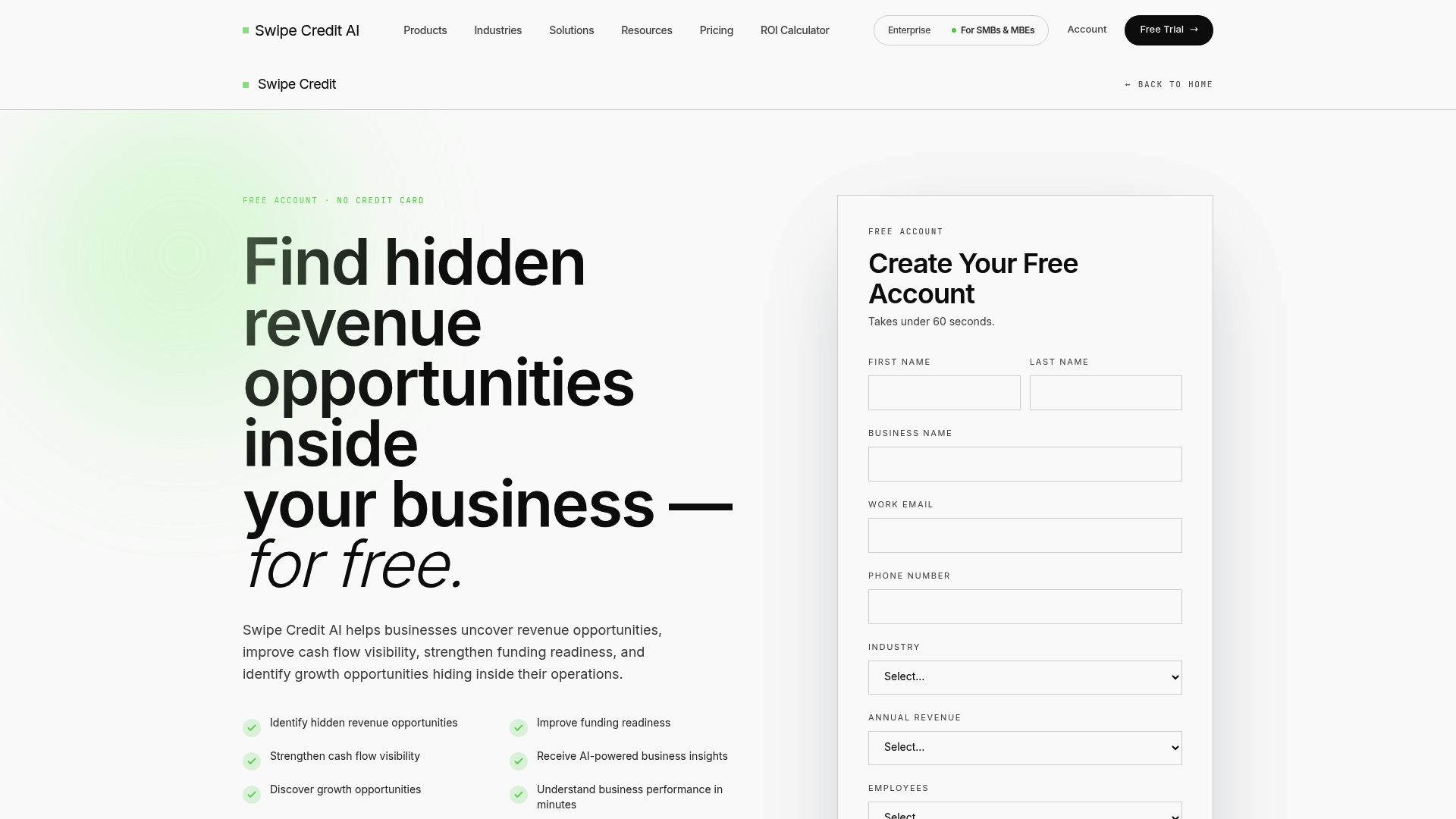
Swipe Credit AI helps teams reveal valuable business opportunities, act with greater clarity, and measure outcomes while keeping people in control.
A typical pilot runs a few months: connect your primary data sources, automate your three highest-volume reconciliation or workflow processes, and measure close cycle time and manual hours against your baseline. The revenue operations automation layer means you are not just closing faster — you are also identifying cash flow and revenue opportunities your current process buries.
Pricing starts with a free tier for SMBs and scales to custom enterprise contracts, so you are not committing to a six-figure annual license before you have seen results. Request a demo or get started free to see how Swipecredit maps to your close and revenue intelligence needs.
Useful sources and next-step references
Use these resources to go deeper on vendor evaluation, pilot design, and compliance requirements:
- Gartner Peer Insights: Trintech Adra — user reviews for reconciliation and close management
- SEC internal control requirements under Sarbanes-Oxley — primary source for SOX audit trail requirements
Swipecredit internal resources for pilot design and ROI evaluation:
- Operational Efficiency Checklist for SMBs: 2026 Guide — practical checklist to identify automation candidates before a pilot
- Business Automation ROI Explained for Decision-Makers — framework for calculating and presenting automation ROI
- AI in Revenue Forecasting: A Finance Pro’s 2026 Guide — how AI augments close and forecasting in mid-market finance teams
- Enterprise Revenue Intelligence — platform capabilities for mid-market and enterprise demo requests
- Swipecredit Services — managed pilot and integration service options
Suggested images: comparison table screenshot showing vendor grid, dashboard screenshot of a reconciliation workflow, pilot timeline graphic (30/60/90-day milestones).
This article is general information for finance decision-makers and does not constitute legal, accounting, or compliance advice. Confirm current regulatory requirements with your external auditors or a qualified professional.
FAQ
Who are BlackLine’s biggest competitors?
Swipe Credit AI helps teams turn permissioned business data into clearer opportunities and measurable economic outcomes while keeping people in control. Access and available capabilities depend on the selected plan and connected systems.
Is FloQast better than BlackLine?
FloQast is faster to implement and better suited for mid-market controllers who need checklist-based close management, but it offers less depth in automated transaction matching than BlackLine’s enterprise reconciliation engine. The right answer depends on whether your primary need is visibility and task management (FloQast wins) or high-volume automated matching (BlackLine or HighRadius wins).
Why is BlackLine so expensive?
BlackLine’s total cost of ownership is driven by per-user licensing plus required professional services fees during implementation, which frequently push the first-year cost well above the base license price. Teams that need deep customization or complex ERP integrations often find professional services costs exceed the annual subscription.
Is SAP going to acquire BlackLine?
SAP reportedly proposed a $4.5 billion acquisition of BlackLine, which BlackLine rejected. Vendor stability and M&A risk are legitimate procurement considerations — finance leaders evaluating any close platform should review product roadmaps and ownership structure as part of due diligence.
What should I measure in the first 90 days after switching platforms?
Track three metrics from day one: close cycle time (days from period end to final sign-off), manual reconciliation hours per period, and the number of open items remaining at close. Improvement across all three by day 90 confirms the implementation is on track; stagnation in any one signals a process or configuration issue worth addressing before the next audit cycle.